
 Image 1 of 4
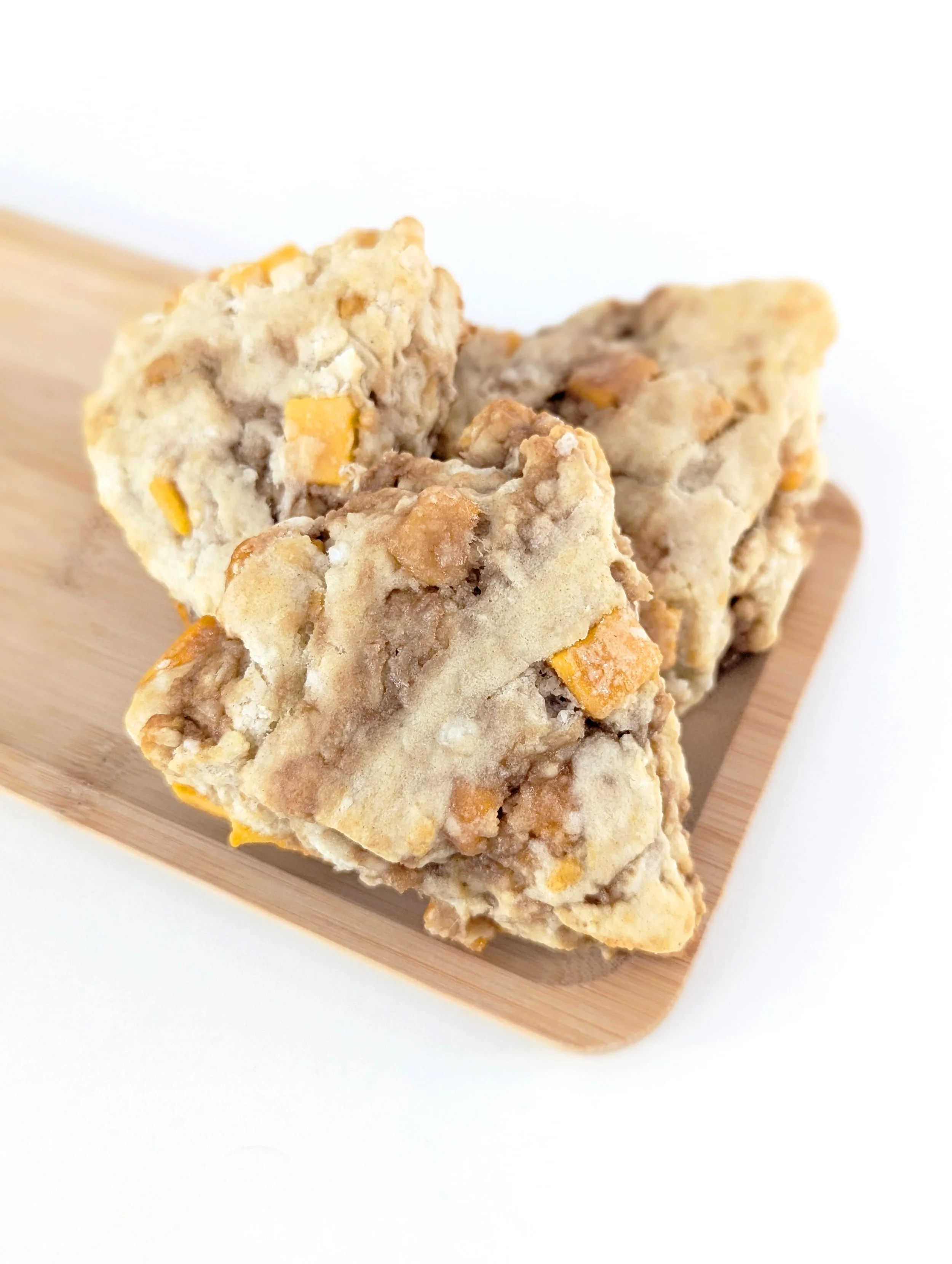 Image 2 of 4
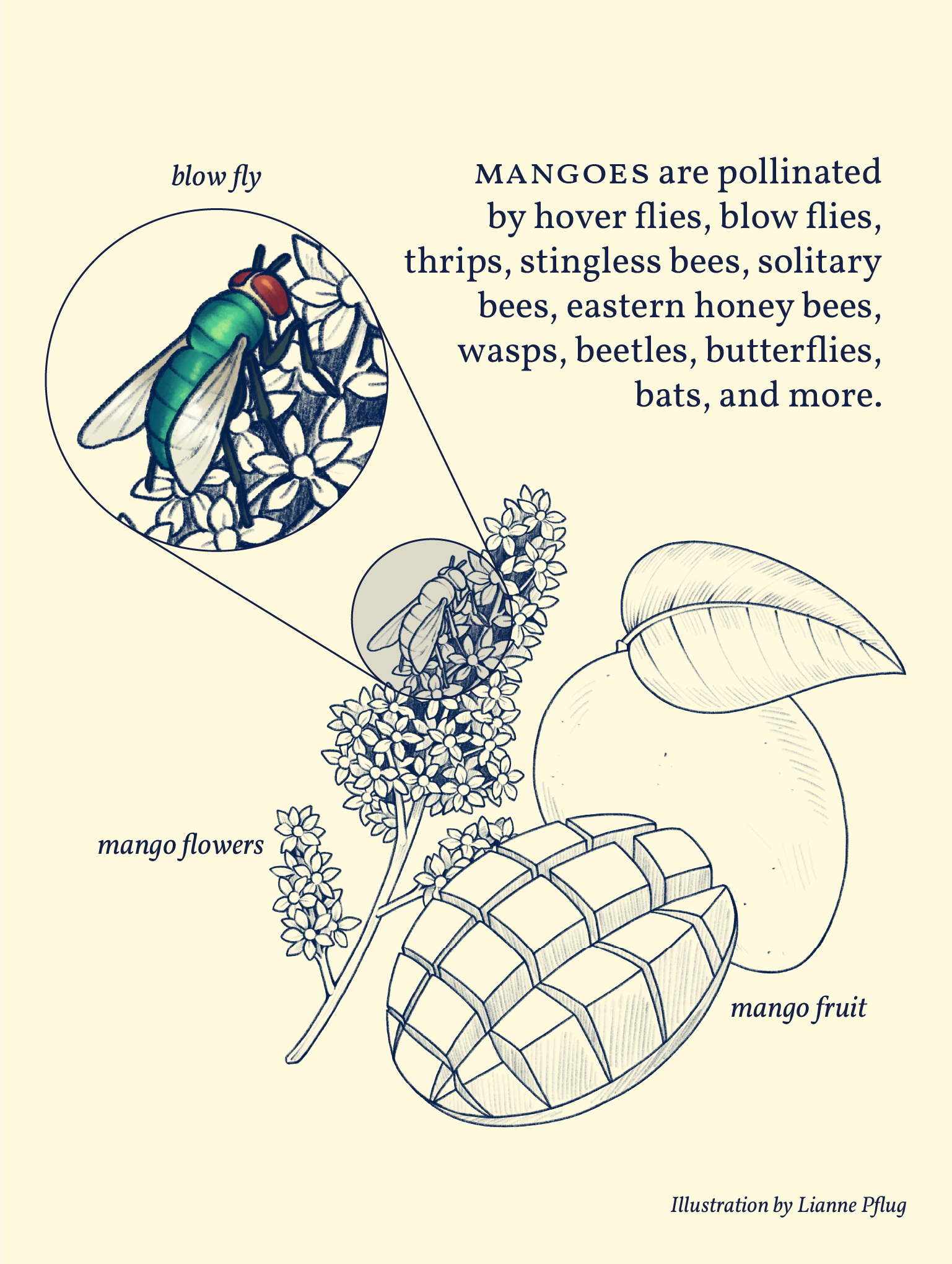 Image 3 of 4
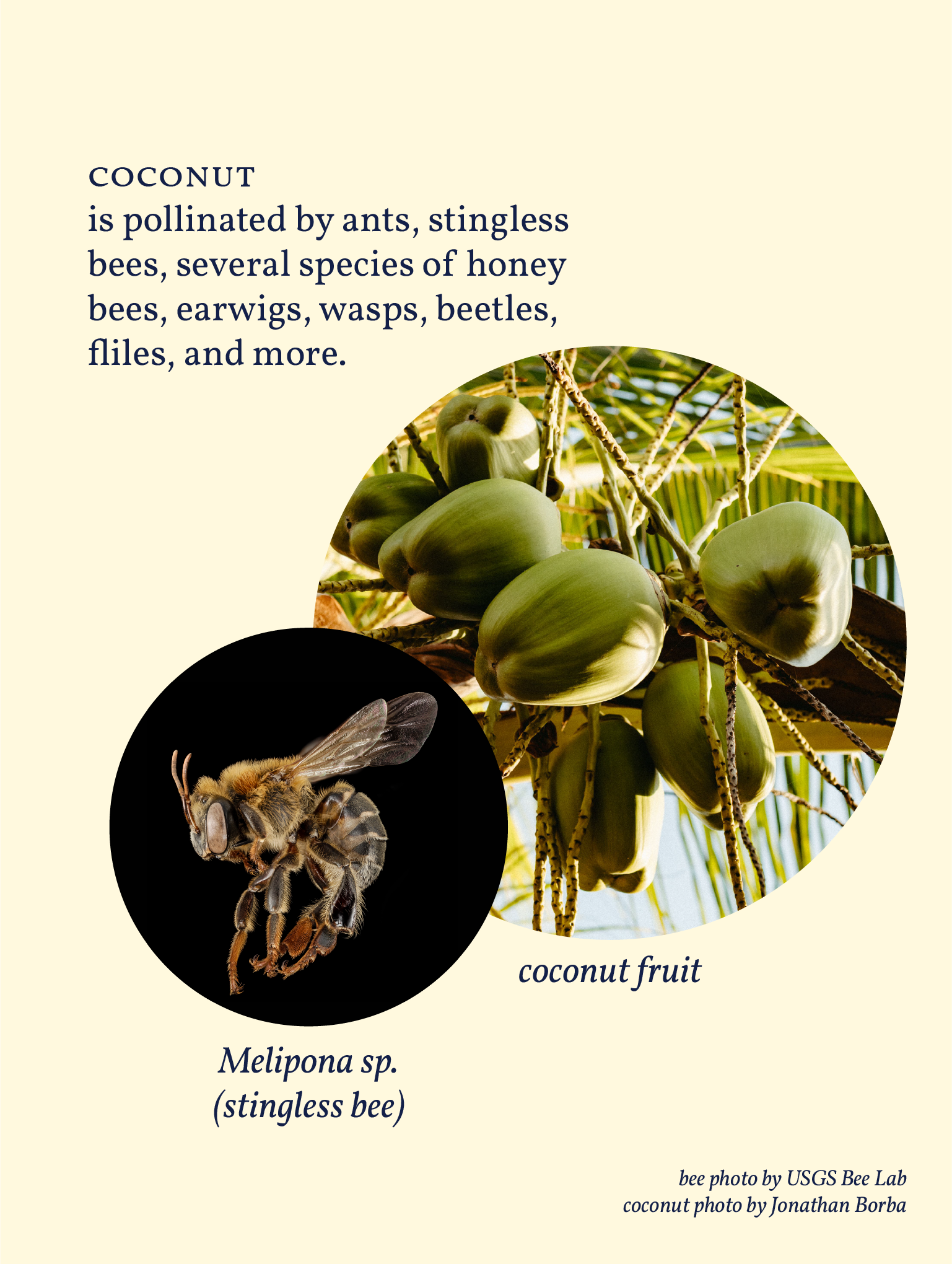 Image 4 of 4
2.25 oz scone, 3 pieces per order.
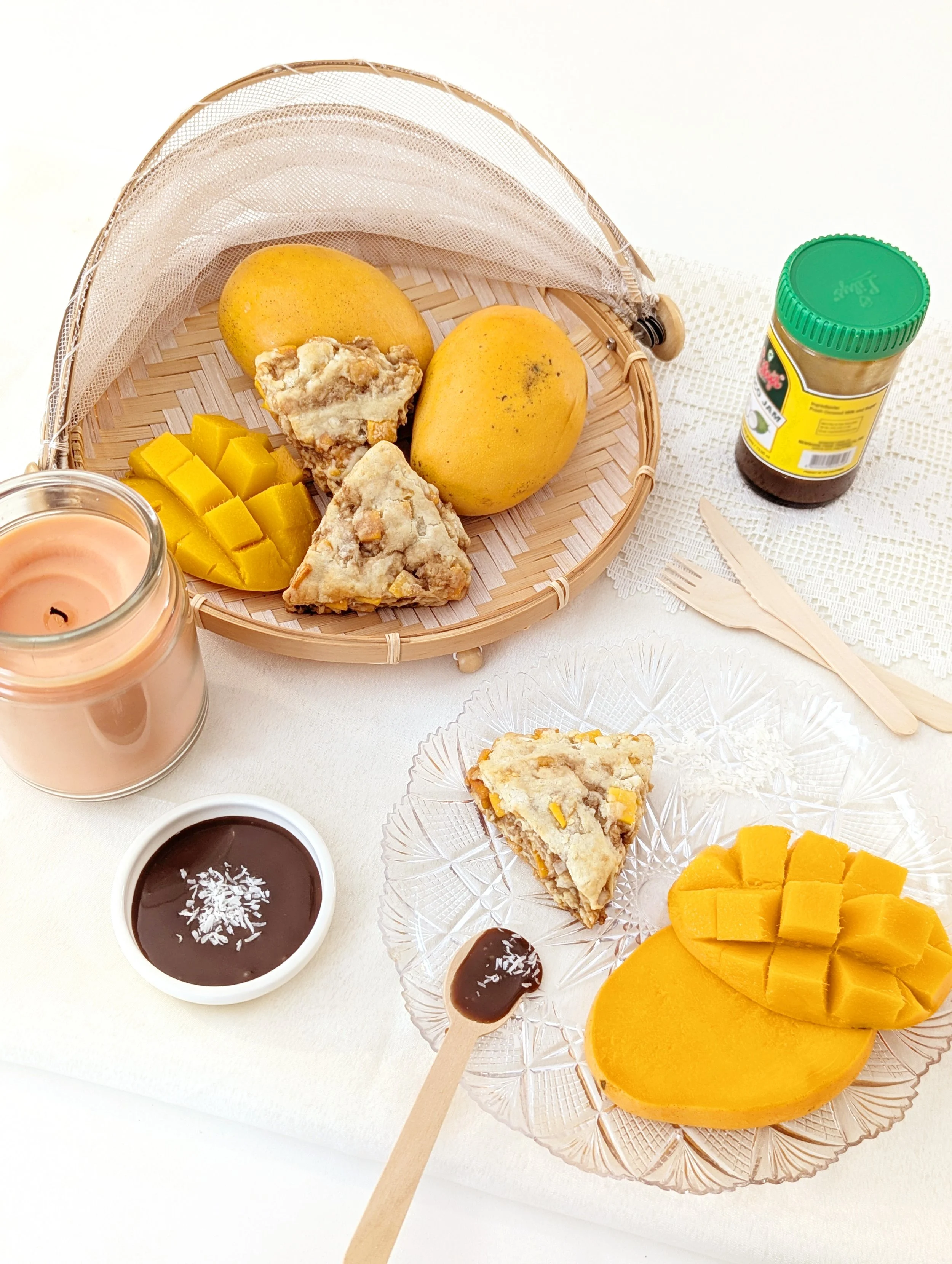
A flaky and tender scone with dried mango chunks, grated coconut, and swirls of coco jam (Filipino caramelized coconut spread).
Allergens: Wheat, Milk, Egg, Soy.
Processed in a facility that also processes nuts.
Made in a Home Kitchen.
Key ingredients in all of our baked goods benefit greatly from pollinators! Some mango trees may be self-pollinating but have also been studied to be wind and animal pollinated. Mango flowers seem to not be very attractive to western honey bees but are instead frequented by hover flies, blow flies, thrips, stingless bees, solitary bees, eastern honey bees, wasps, beetles, butterflies, and bats! Animal pollination significantly increases fruit set.
Coconut is both wind and insect pollinated but more predominantly by insects. Insect visitors include ants, stingless bees, several species of honey bees, earwigs, wasps, beetles, flies, and more.
References:
• Crane, Jonathan H., et al. “Mango Growing in the Florida Home Landscape.” University of Florida, Ask IFAS, 6 Feb 2024, https://ask.ifas.ufl.edu/publication/MG216.
• Kumar, Sanjay, et al. “Role of Insects in Pollination of Mango Trees.” International Research Journal of Biological Sciences, Volume 5(1), pp. 64-67, January 2016. https://www.researchgate.net/publication/292617011_Role_of_Insects_in_Pollination_of_Mango_Trees.
• “Mango Pollination: How Important are Alternative Flower Visitors?” Australian Mangoes, https://www.industry.mangoes.net.au/resources/resources-library/mango-pollination-how-important-are-alternative-flower-visitors. Accessed 6 July 2026.
• Martins, Dino. “How Pollinators Make Mangoes!” Discover Pollinators, 23 May 2013, https://discoverpollinators.org/how-pollinators-make-mangoes/.
• Ramirez, F. & Davenport, T.L. “Mango (Mangifera indica L.) pollination: A review.” Scientia Horticulturae, Volume 203, 12 May 2016, pp. 158-168, https://doi.org/10.1016/j.scienta.2016.03.011.
• Regi, Thomas J., et al. “Flowering and pollination biology in coconut.” Journal of Plantation Crops, Volume 42(2), pp. 109-117, 2013. https://www.researchgate.net/publication/281146497_Studies_on_pollination_biology_in_coconut.
IMPORTANT NOTE: All purchases of our baked goods through this website are PRE-ORDERS that need to be picked up at the location and date/timeframe specified during checkout. Shipping is available only within New York state via USPS Priority Mail. Shipments are sent out the Monday following the pre-order pick-up date and should arrive in 2-3 days. If you enter a shipping address outside of NY state, your order will be canceled and refunded.
2.25 oz scone, 3 pieces per order.
A flaky and tender scone with dried mango chunks, grated coconut, and swirls of coco jam (Filipino caramelized coconut spread).
Allergens: Wheat, Milk, Egg, Soy.
Processed in a facility that also processes nuts.
Made in a Home Kitchen.
Key ingredients in all of our baked goods benefit greatly from pollinators! Some mango trees may be self-pollinating but have also been studied to be wind and animal pollinated. Mango flowers seem to not be very attractive to western honey bees but are instead frequented by hover flies, blow flies, thrips, stingless bees, solitary bees, eastern honey bees, wasps, beetles, butterflies, and bats! Animal pollination significantly increases fruit set.
Coconut is both wind and insect pollinated but more predominantly by insects. Insect visitors include ants, stingless bees, several species of honey bees, earwigs, wasps, beetles, flies, and more.
References:
• Crane, Jonathan H., et al. “Mango Growing in the Florida Home Landscape.” University of Florida, Ask IFAS, 6 Feb 2024, https://ask.ifas.ufl.edu/publication/MG216.
• Kumar, Sanjay, et al. “Role of Insects in Pollination of Mango Trees.” International Research Journal of Biological Sciences, Volume 5(1), pp. 64-67, January 2016. https://www.researchgate.net/publication/292617011_Role_of_Insects_in_Pollination_of_Mango_Trees.
• “Mango Pollination: How Important are Alternative Flower Visitors?” Australian Mangoes, https://www.industry.mangoes.net.au/resources/resources-library/mango-pollination-how-important-are-alternative-flower-visitors. Accessed 6 July 2026.
• Martins, Dino. “How Pollinators Make Mangoes!” Discover Pollinators, 23 May 2013, https://discoverpollinators.org/how-pollinators-make-mangoes/.
• Ramirez, F. & Davenport, T.L. “Mango (Mangifera indica L.) pollination: A review.” Scientia Horticulturae, Volume 203, 12 May 2016, pp. 158-168, https://doi.org/10.1016/j.scienta.2016.03.011.
• Regi, Thomas J., et al. “Flowering and pollination biology in coconut.” Journal of Plantation Crops, Volume 42(2), pp. 109-117, 2013. https://www.researchgate.net/publication/281146497_Studies_on_pollination_biology_in_coconut.
IMPORTANT NOTE: All purchases of our baked goods through this website are PRE-ORDERS that need to be picked up at the location and date/timeframe specified during checkout. Shipping is available only within New York state via USPS Priority Mail. Shipments are sent out the Monday following the pre-order pick-up date and should arrive in 2-3 days. If you enter a shipping address outside of NY state, your order will be canceled and refunded.