
frequently asked questions
-
No, we generally do not use honey in our products and refrain from centering the conversation around honey bees. There are over 20,000 species of bees worldwide, most of which do not produce honey. Around 4,000 bee species are native to North America, but the Western honey bee is not one of them. Honey bees (Apis mellifera) were brought to the Americas by colonizers to pollinate their crops and have since taken on a large role in our agricultural system. However, contrary to popular belief, they do not need conservation since they are a widely managed and domesticated species. But many wild native bee species and other animal pollinators do face population decline due to factors like habitat loss and climate change and do need our support! Many of them are important pollinators for our foods and all provide essential ecosystem services. Those are the pollinators we focus on highlighting through our baked goods and whose conservation we aim to contribute to.
-
We sell our baked goods through online pre-orders that open every month or so on our website for pick-up in Queens or shipping within NY state. Pre-orders normally open about 3 weeks before the pick-up date and close the weekend prior. Details about exact pick-up time, location, etc. for each drop are available before completing checkout. We sometimes also sell at markets or events in lieu of monthly pre-orders (check out our calendar for what we have planned). If you’re looking to place an order outside of our regular schedule or want to inquire about catering, contact us and we’ll see if we can fit you in!
-
Normally, pick-ups are only available at a single location in Queens and at a specified date (usually a Saturday) and timeframe for each drop. The exact location and time for each pick-up are detailed when pre-orders open and in your cart before completing checkout. Location and time may be different from previous drops, so be sure to check that those details work for you before completing checkout. At pick up, you will be asked to show a copy of your receipt to ensure you receive the correct order.
-
Yes, as long as the person picking up the order can show us a copy of the receipt.
-
Yes, we offer shipping for all our products only within NY state (in compliance with NY’s Home Processor Exemption rules). If you place an order to be shipped to an address outside of NY state, your order will be canceled and refunded. Shipping orders are sent out the Monday following the pre-order pick-up date via USPS Priority Mail and should arrive in 2-3 days. We do not offer local day-of delivery.
-
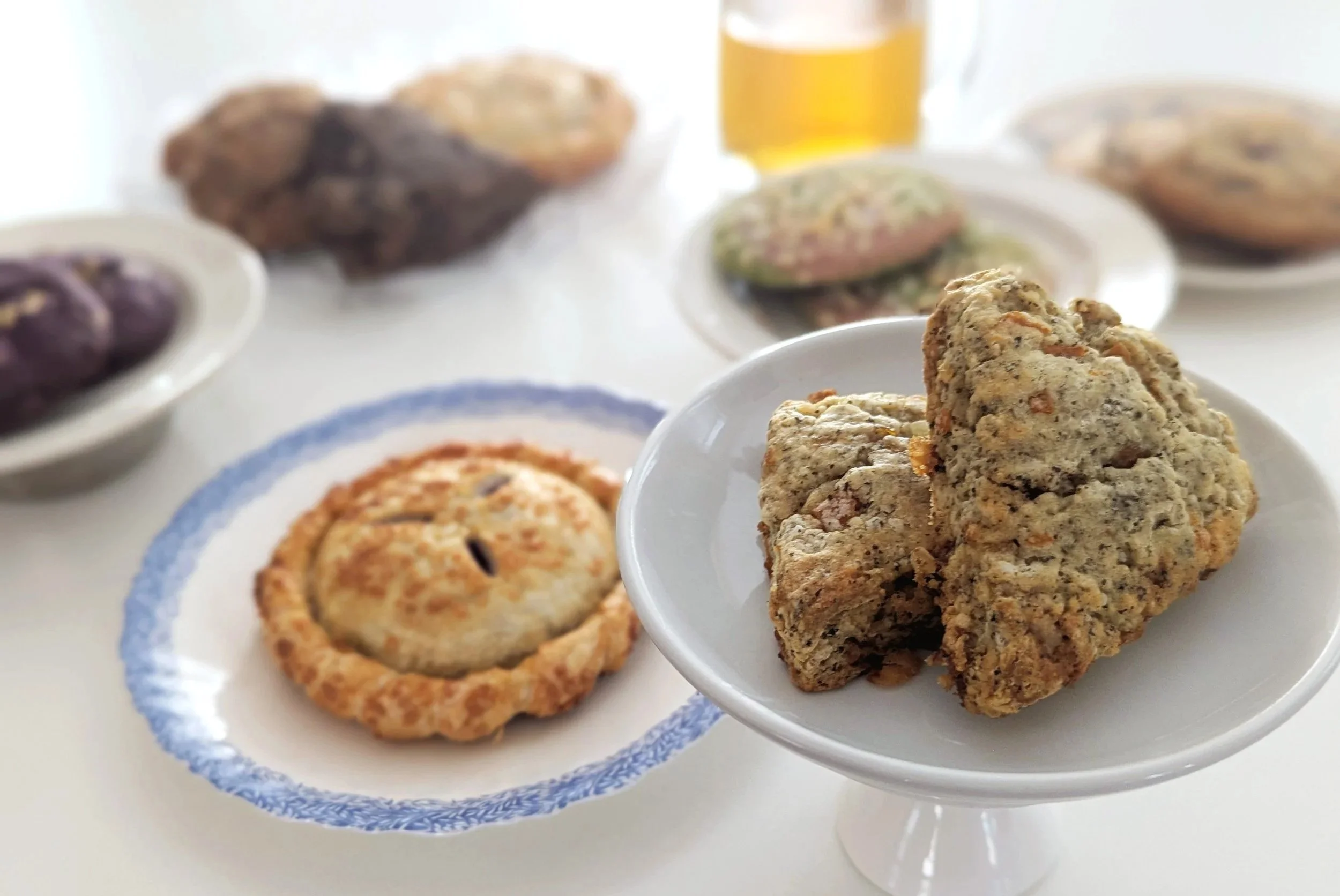
Our baked goods are best stored in a cool, dry place, and while they do not require refrigeration, storing them in the fridge can help extend their shelf life. For best enjoyment, we highly recommend reheating hand pies and scones in a toaster oven, conventional or convection oven, or air fryer for a few minutes at 350-375°F. Cookies can be microwaved for a few seconds if desired. Any of our baked goods pair well with a cup of tea, coffee, or milk!
-
Our baked goods are heat sealed in compostable (for both industrial and home composting environments) clear bags made from >90% sustainable wood cellulose. We use labels made from sugarcane paper that are suitable for industrial composting and safe for home composting though results may vary depending on your home compost system (with adhesive that is both compostable and recyclable). Our shipping boxes are recyclable and made with over 80% recycled materials. We stuff them with recyclable packing paper made from 100% post-consumer recycled material in order to protect our products during shipment.
-
Keep an eye on our Instagram posts and stories (@pollenbasketcafe) or join our email list to be notified when we open pre-orders.
-
Yes, we accept a limited amount of special orders and catering orders if our schedule allows. Please contact us via email or our contact page with some details on what you’re looking for and we’ll see what we can do for you!
-
Full to partial refunds can be provided if you need to change or cancel your order for any reason up until 24 hours after pre-order closes for each drop. If, for some reason, we are unable to fulfill your order, a full refund will be provided. If you receive your order and are unsatisfied, Pollen Basket may or may not provide a full or partial refund at our own discretion. Refunds cannot be provided for failure to pick up an order at the specified date/time/location or for failure to provide your receipt during pick-up. Please contact us if you would like to request a refund.
-
Our available flavors change with each drop, and most are only available for a few times each year (with the exception of Spiced Apple Hand Pies and Chocolate Chunk Cookies which are available year round). If a flavor does well, it is likely to return around the same time the following year! Outside of those times, you can contact us to request a special order for specific flavors and we’ll see what we can do. We accept a limited amount of special orders if our schedule allows (minimums required).
-
We like this list of “Top 10 Things You Can Do for Bees” from Common Native Bees of the Eastern United States by Heather Holm. Although the list may be specifically for bees, they’re great for other pollinators and native wildlife as well!
Feed Bees
1. Plant a diversity of flowering plants (trees, shrubs, and perennials) that are native to your region. Instead of cultivars, use straight native species and include host plants for specialist bees.
2. Provide flowers with a variety of colors and forms—both simple (open) and complex.
3. Ensure that your garden provides a continuous succession of flowers for the entire growing season.
House Bees
4. Provide areas of bare soil for ground-nesting bees.
5. Avoid landscape fabric, plastic, or other soil coverings that inhibit nesting opportunities for ground-nesting bees.
6. Leave standing dead trees (if they don’t pose a hazard), as well as logs lying on the ground and dead perennial plant stem stubble, all of which provide nesting opportunities for cavity-nesting bees.
7. Do not disturb existing bee nesting sites.
Protect Bees
8. Refrain from using pesticides of any kind or synthetic fertilizers.
9. Remove invasive plant species that outcompete native plant species that native bees depend upon. Avoid introducing non-native bee species that may compete for food and transmit diseases to native bees.
Celebrate Bees
10. Place a pollinator habitat sign in your garden and talk to your neighbors about the importance of native bees and other pollinating and beneficial insects.
-
Visit our resources page where we are continuously building a collection of information and recommended resources on pollinators and how individuals can aid in their conservation!
-
5% of our sales are donated to organizations that work in ecological conservation, land stewardship, and food security. Read about them here!