
 Image 1 of 4
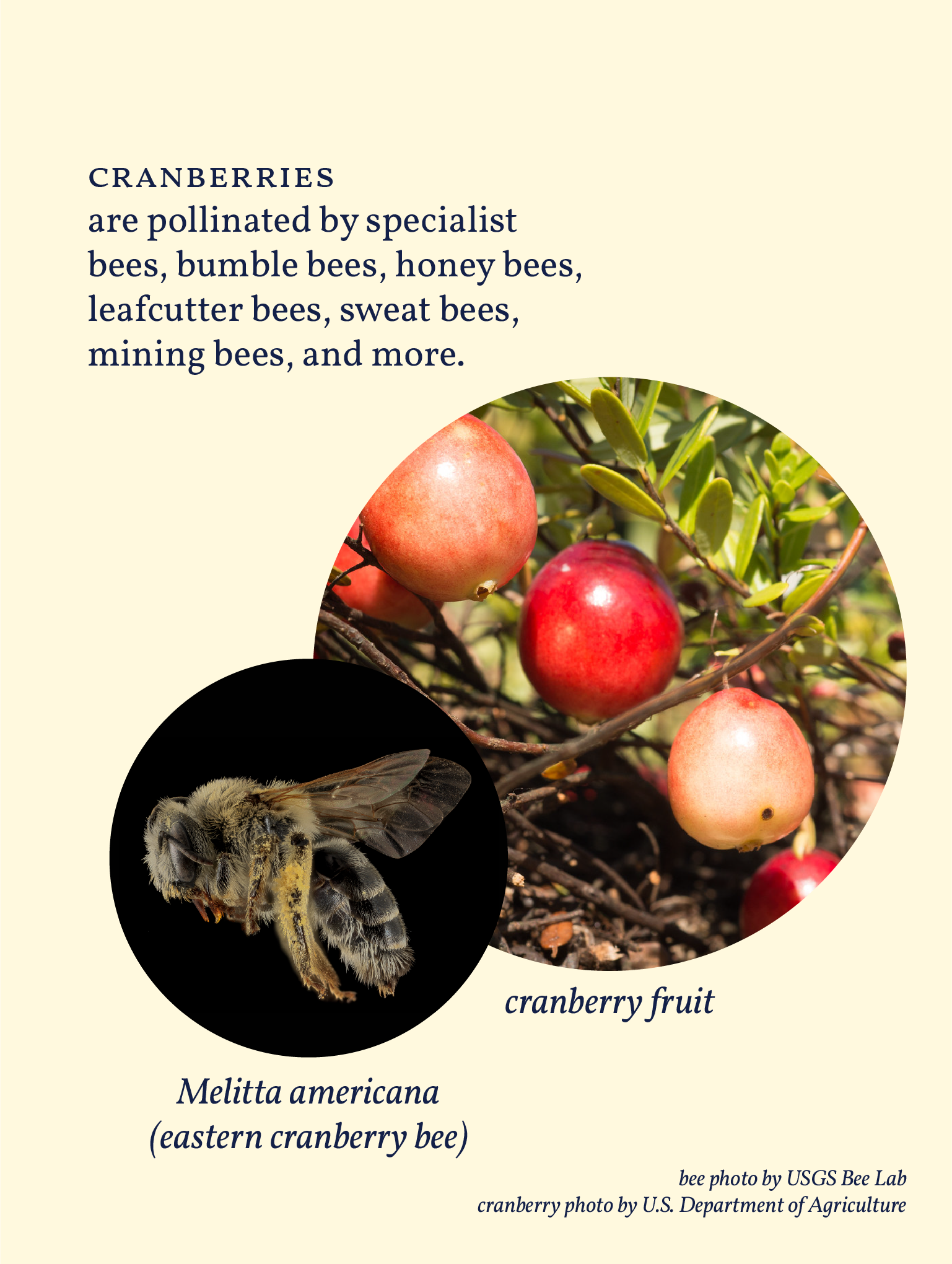 Image 2 of 4
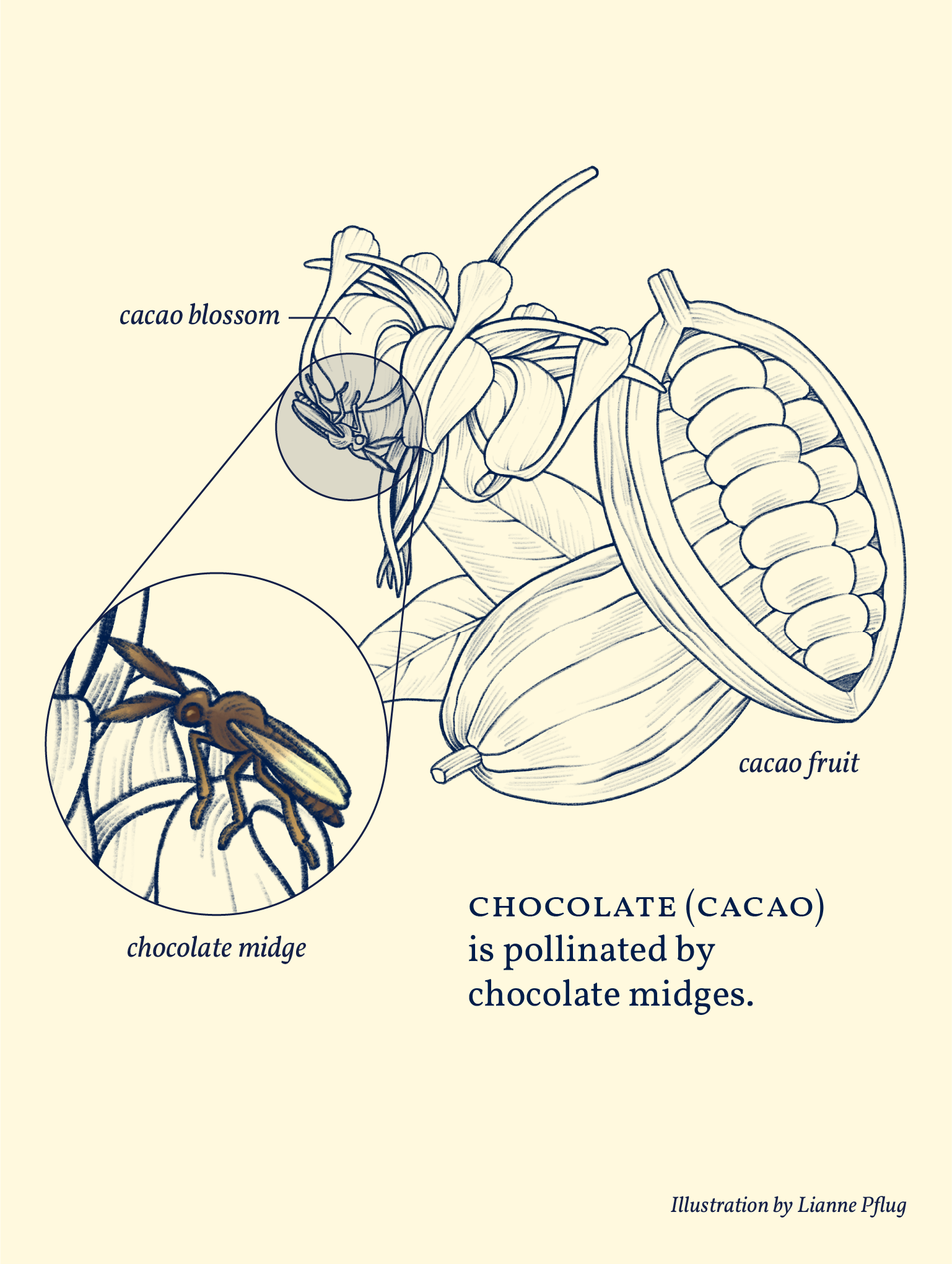 Image 3 of 4
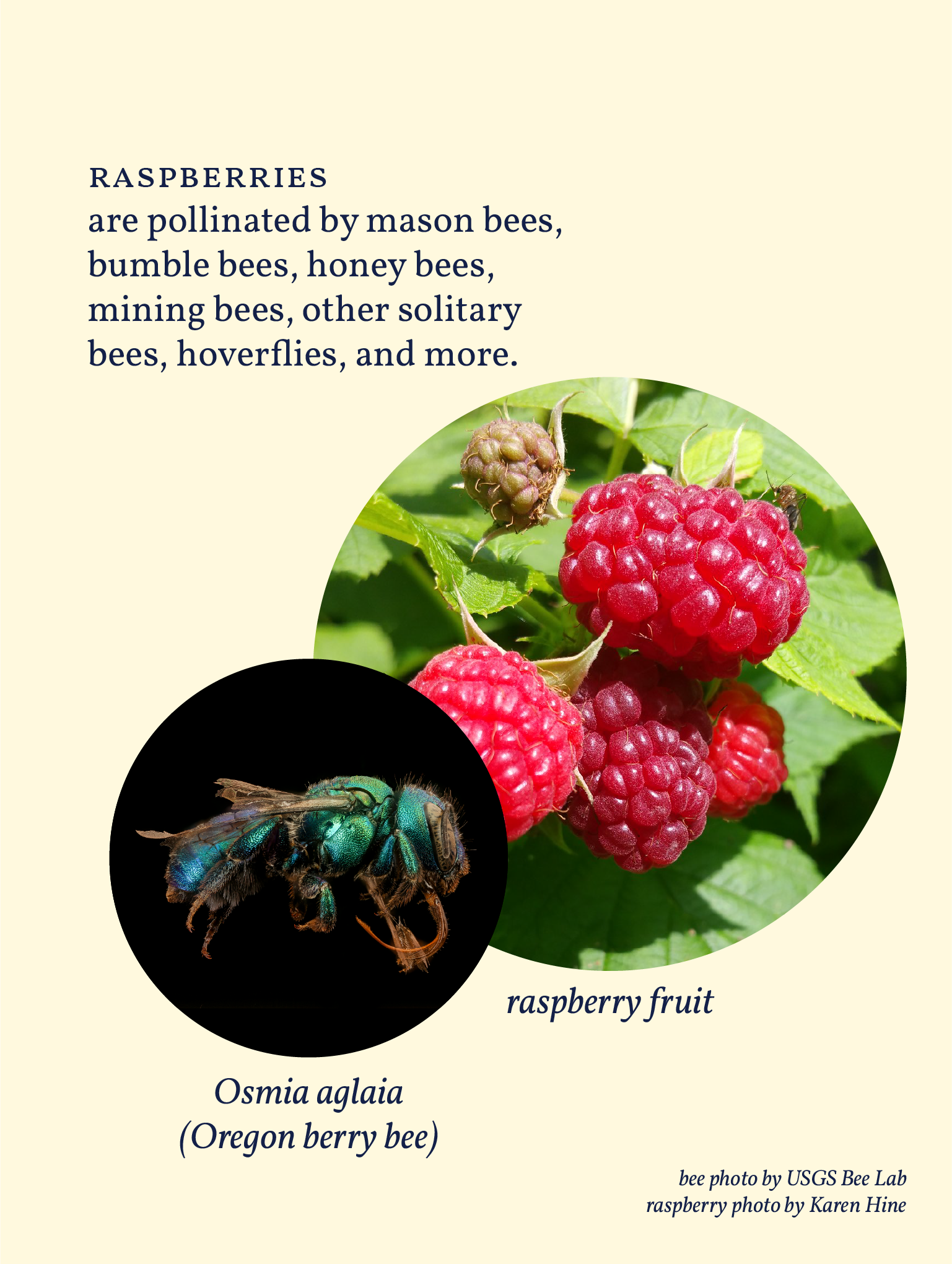 Image 4 of 4
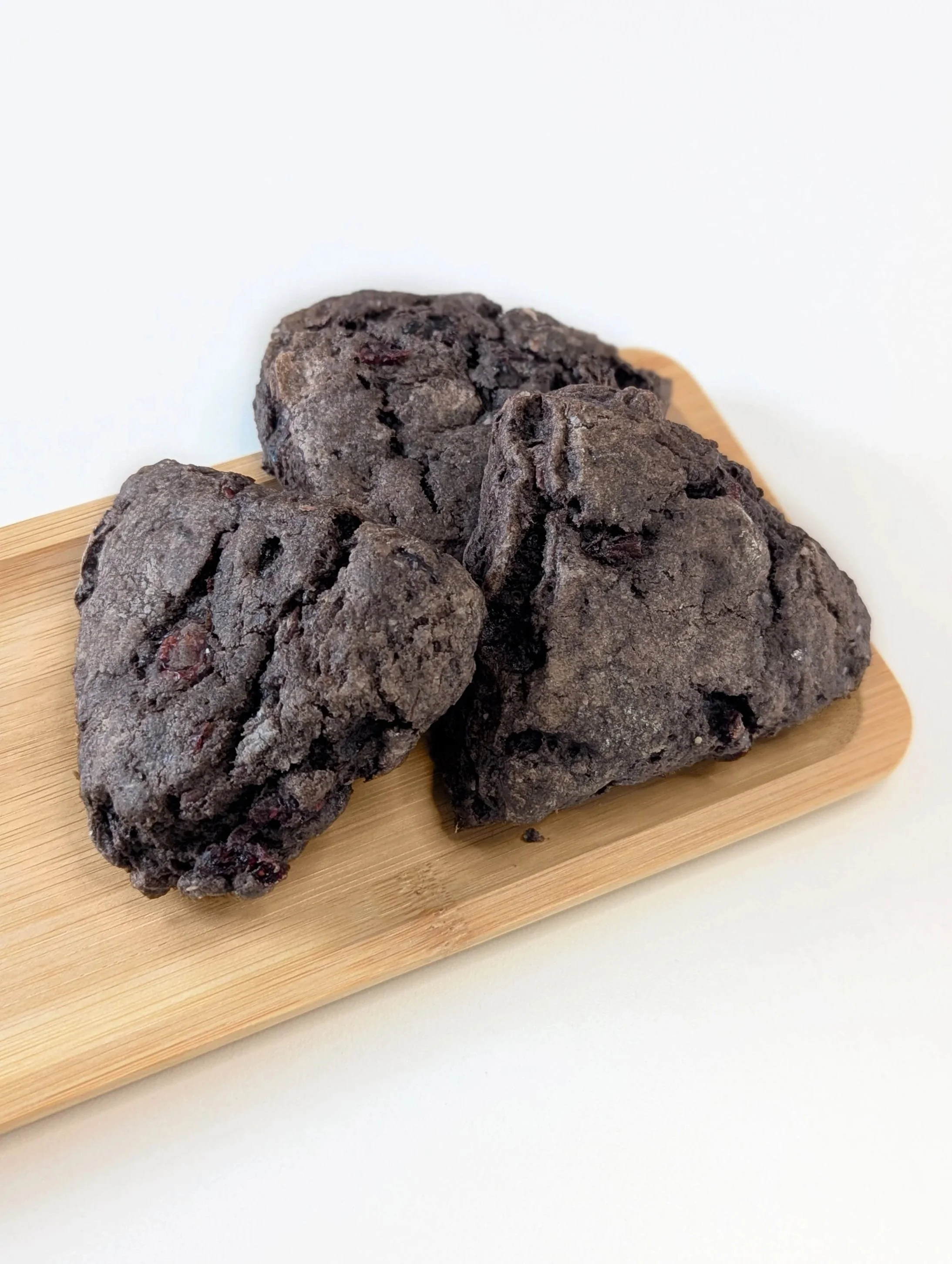
2.75 oz scone, 3 pieces per order.
A flaky and tender chocolate scone with dried cranberries, chocolate chunks, and swirled with raspberry jam.
Allergens: Wheat, Milk, Egg, Soy.
Processed in a facility that also processes nuts.
Made in a Home Kitchen.
Key ingredients in all of our baked goods benefit greatly from pollinators! Cranberries are native to North America, and while honey bees are often still used for commercial crops, their best pollinators are likely native ones that evolved alongside the plant like the eastern cranberry bee (Melitta americana) and bumble bees. Eastern cranberry bees are ground nesting bees that specialize on cranberries and blueberries, while bumble bees can buzz pollinate to efficiently and effectively pollinate cranberry flowers. Leafcutter bees, sweat bees, and mining bees have also been observed pollinating cranberry flowers.
Chocolate is made from the dried, fermented seeds of cacao fruits which grow on the cacao tree, Theobroma cacao. The flowers of the cacao tree are tiny and complex and therefore need tiny pollinators to transfer their pollen so they can produce fruit. That’s where chocolate midges come in! Tiny flies in the family Ceratopogonidae, including the genus Forcipomyia, are known to be important pollinators of cacao. Other types of tiny flies, wasps, and ants have also been observed visiting cacao flowers, but more evidence is needed to know if they are successfully pollinating.
While raspberry plants (and many of their relatives like blackberries in the genus Rubus) can self-pollinate, with the help of insect pollinators, they can form larger sized and a larger quantity of fruit. While honey bees are often used to commercially pollinate raspberry crops, other managed and wild species are excellent pollinators as well. They include: mason bees, bumble bees, mining bees, other solitary bees, and hoverflies.
References:
• Andrikopoulos, C. J., & Cane, J. H. “Comparative Pollination Efficacies of Five Bee Species on Raspberry.” Journal of Economic Entomology, Volume 111, Issue 6, Dec. 2018, Pages 2513–2519. Oxford Academic, https://doi.org/10.1093/jee/toy226.
• Broussard, Melissa, et al. "Native Bees, Honeybees, and Pollination in Oregon Cranberries." HortScience, Volume 46, Issue 6, 2011, Pages 885–888. https://doi.org/10.21273/HORTSCI.46.6.885.
• “Cacao pollination.” Cacao Pollination, Community Ecology Lab at Vrije Universiteit Brussel, https://cacaopollination.com/cacao-pollinators/. Accessed 1 Sep. 2025.
• Cocca, Erin. “Meet The Insects That Pollinate Your Favorite Fall Foods.” The Xerces Society, 6 Nov. 2025, https://xerces.org/blog/meet-insects-that-pollinate-your-favorite-fall-foods.
• “How Cranberries Grow: Pollination.” Massachusetts Cranberries, https://www.cranberries.org/pollination. Accessed 11 Nov. 2025.
• Koeneke, Mary Alice. “From Cacao to Chocolate.” Penn State Extension, 20 Jan. 2023, https://extension.psu.edu/from-cacao-to-chocolate.
• “Raspberry Pollinators and Visitors: Focus on Bees.” Government of Manitoba, 2015, https://www.gov.mb.ca/agriculture/crops/crop-management/pubs/raspberry-pollinators.pdf.
IMPORTANT NOTE: All purchases of our baked goods through this website are PRE-ORDERS that need to be picked up at the location and date/timeframe specified during checkout. Shipping is available only within New York state via USPS Priority Mail. Shipments are sent out the Monday following the pre-order pick-up date and should arrive in 2-3 days. If you enter a shipping address outside of NY state, your order will be canceled and refunded.
2.75 oz scone, 3 pieces per order.
A flaky and tender chocolate scone with dried cranberries, chocolate chunks, and swirled with raspberry jam.
Allergens: Wheat, Milk, Egg, Soy.
Processed in a facility that also processes nuts.
Made in a Home Kitchen.
Key ingredients in all of our baked goods benefit greatly from pollinators! Cranberries are native to North America, and while honey bees are often still used for commercial crops, their best pollinators are likely native ones that evolved alongside the plant like the eastern cranberry bee (Melitta americana) and bumble bees. Eastern cranberry bees are ground nesting bees that specialize on cranberries and blueberries, while bumble bees can buzz pollinate to efficiently and effectively pollinate cranberry flowers. Leafcutter bees, sweat bees, and mining bees have also been observed pollinating cranberry flowers.
Chocolate is made from the dried, fermented seeds of cacao fruits which grow on the cacao tree, Theobroma cacao. The flowers of the cacao tree are tiny and complex and therefore need tiny pollinators to transfer their pollen so they can produce fruit. That’s where chocolate midges come in! Tiny flies in the family Ceratopogonidae, including the genus Forcipomyia, are known to be important pollinators of cacao. Other types of tiny flies, wasps, and ants have also been observed visiting cacao flowers, but more evidence is needed to know if they are successfully pollinating.
While raspberry plants (and many of their relatives like blackberries in the genus Rubus) can self-pollinate, with the help of insect pollinators, they can form larger sized and a larger quantity of fruit. While honey bees are often used to commercially pollinate raspberry crops, other managed and wild species are excellent pollinators as well. They include: mason bees, bumble bees, mining bees, other solitary bees, and hoverflies.
References:
• Andrikopoulos, C. J., & Cane, J. H. “Comparative Pollination Efficacies of Five Bee Species on Raspberry.” Journal of Economic Entomology, Volume 111, Issue 6, Dec. 2018, Pages 2513–2519. Oxford Academic, https://doi.org/10.1093/jee/toy226.
• Broussard, Melissa, et al. "Native Bees, Honeybees, and Pollination in Oregon Cranberries." HortScience, Volume 46, Issue 6, 2011, Pages 885–888. https://doi.org/10.21273/HORTSCI.46.6.885.
• “Cacao pollination.” Cacao Pollination, Community Ecology Lab at Vrije Universiteit Brussel, https://cacaopollination.com/cacao-pollinators/. Accessed 1 Sep. 2025.
• Cocca, Erin. “Meet The Insects That Pollinate Your Favorite Fall Foods.” The Xerces Society, 6 Nov. 2025, https://xerces.org/blog/meet-insects-that-pollinate-your-favorite-fall-foods.
• “How Cranberries Grow: Pollination.” Massachusetts Cranberries, https://www.cranberries.org/pollination. Accessed 11 Nov. 2025.
• Koeneke, Mary Alice. “From Cacao to Chocolate.” Penn State Extension, 20 Jan. 2023, https://extension.psu.edu/from-cacao-to-chocolate.
• “Raspberry Pollinators and Visitors: Focus on Bees.” Government of Manitoba, 2015, https://www.gov.mb.ca/agriculture/crops/crop-management/pubs/raspberry-pollinators.pdf.
IMPORTANT NOTE: All purchases of our baked goods through this website are PRE-ORDERS that need to be picked up at the location and date/timeframe specified during checkout. Shipping is available only within New York state via USPS Priority Mail. Shipments are sent out the Monday following the pre-order pick-up date and should arrive in 2-3 days. If you enter a shipping address outside of NY state, your order will be canceled and refunded.