
 Image 1 of 5
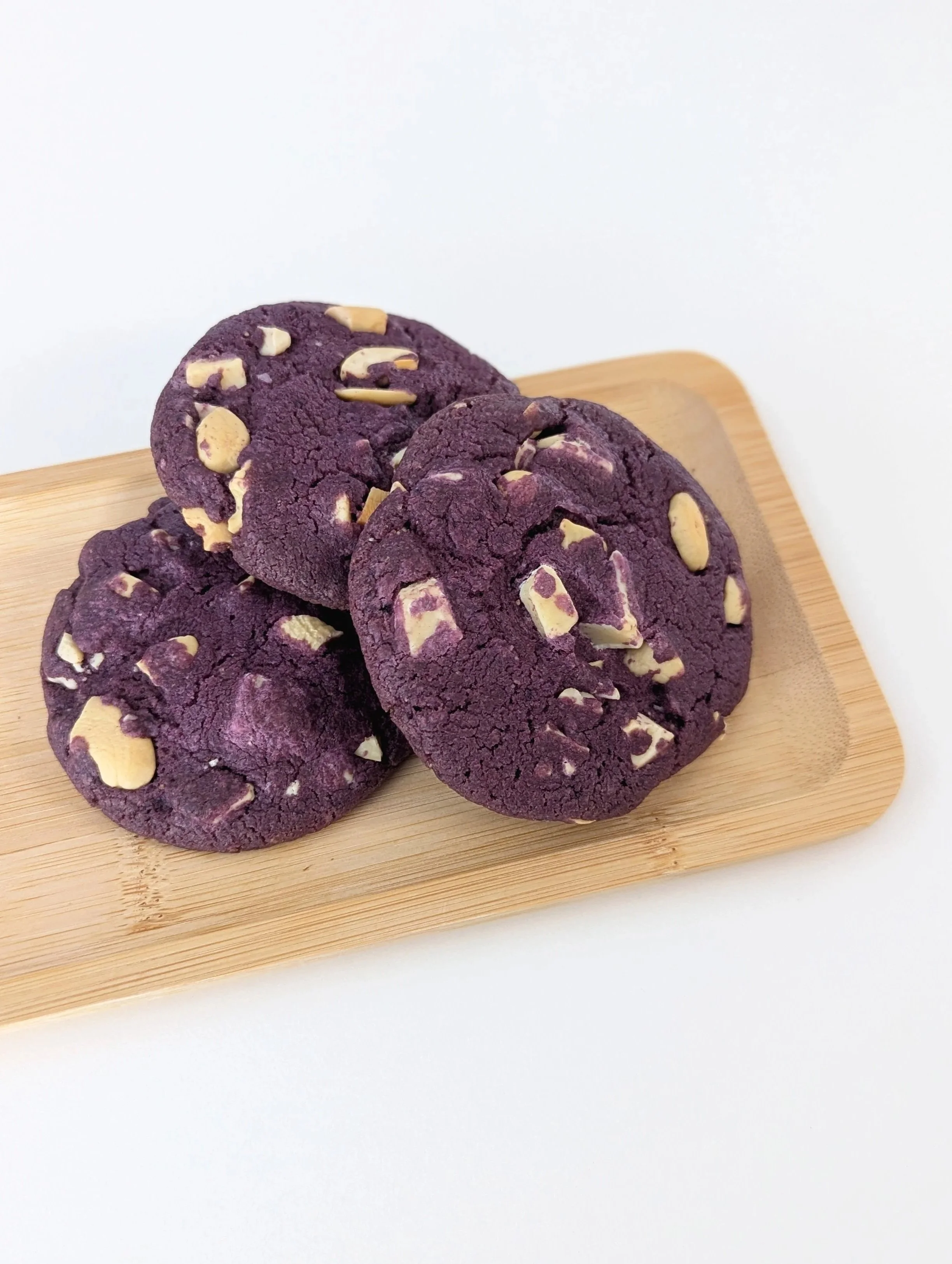 Image 2 of 5
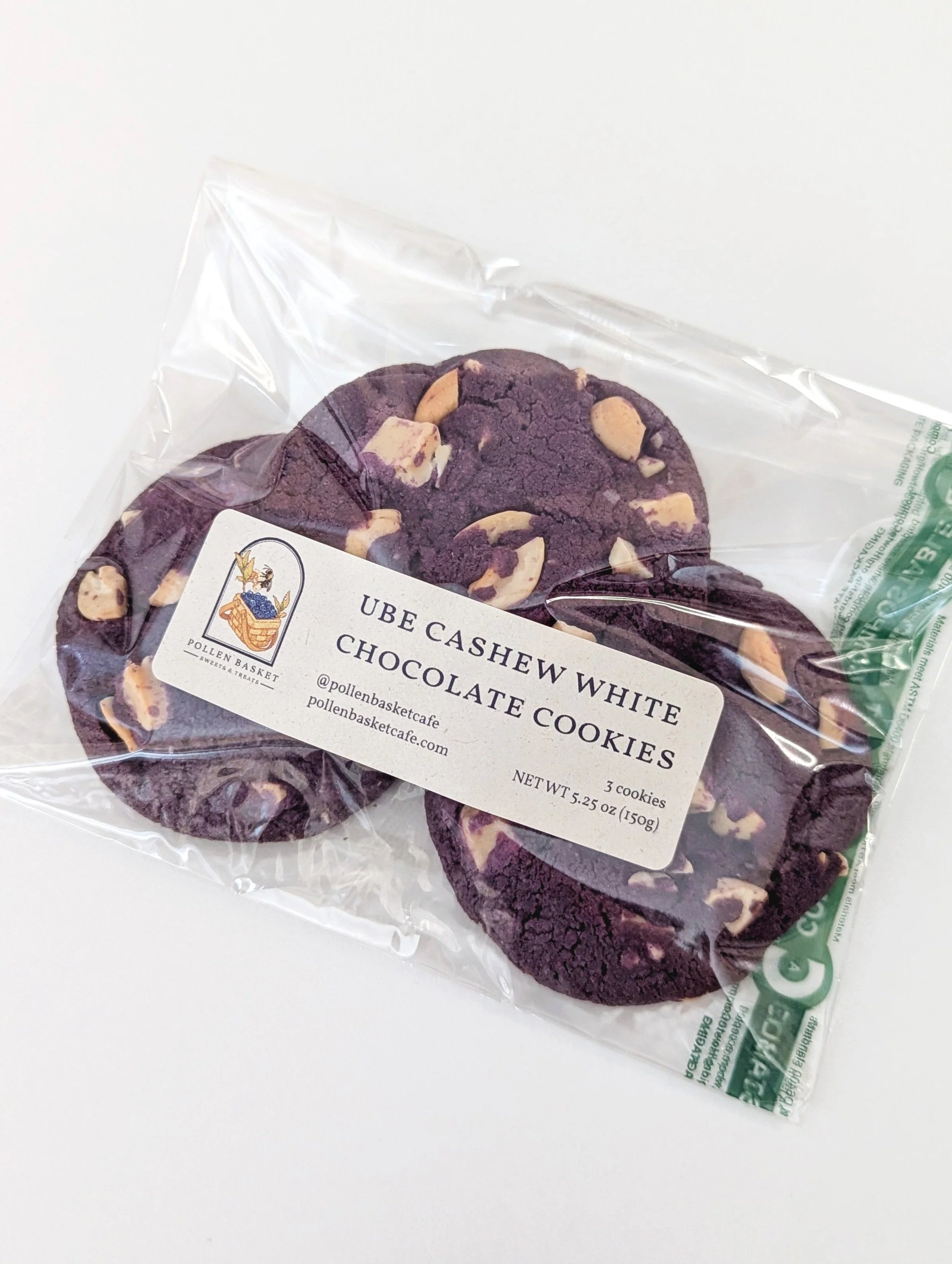 Image 3 of 5
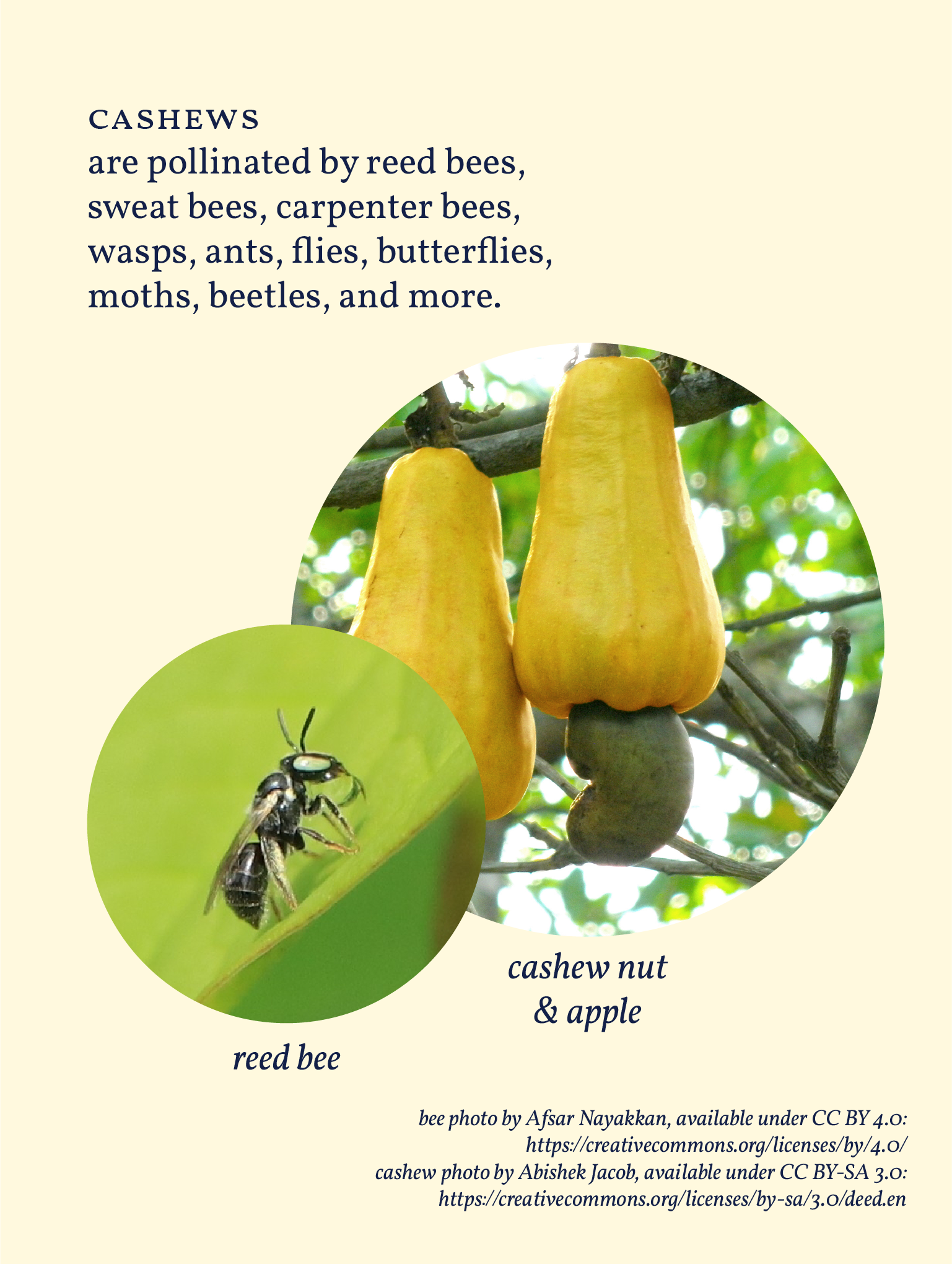 Image 4 of 5
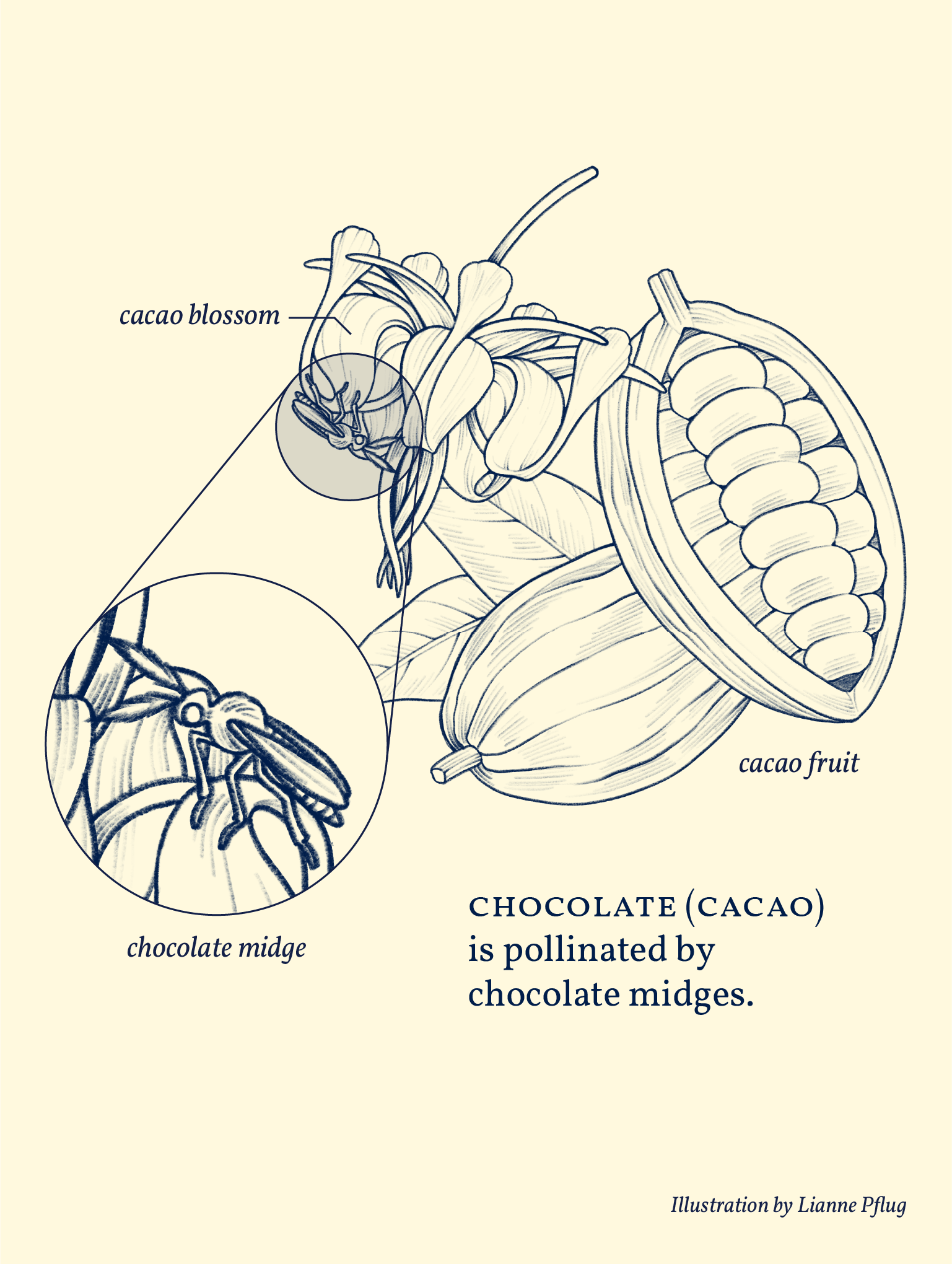 Image 5 of 5
1.75 oz cookie, 3 pieces per order.
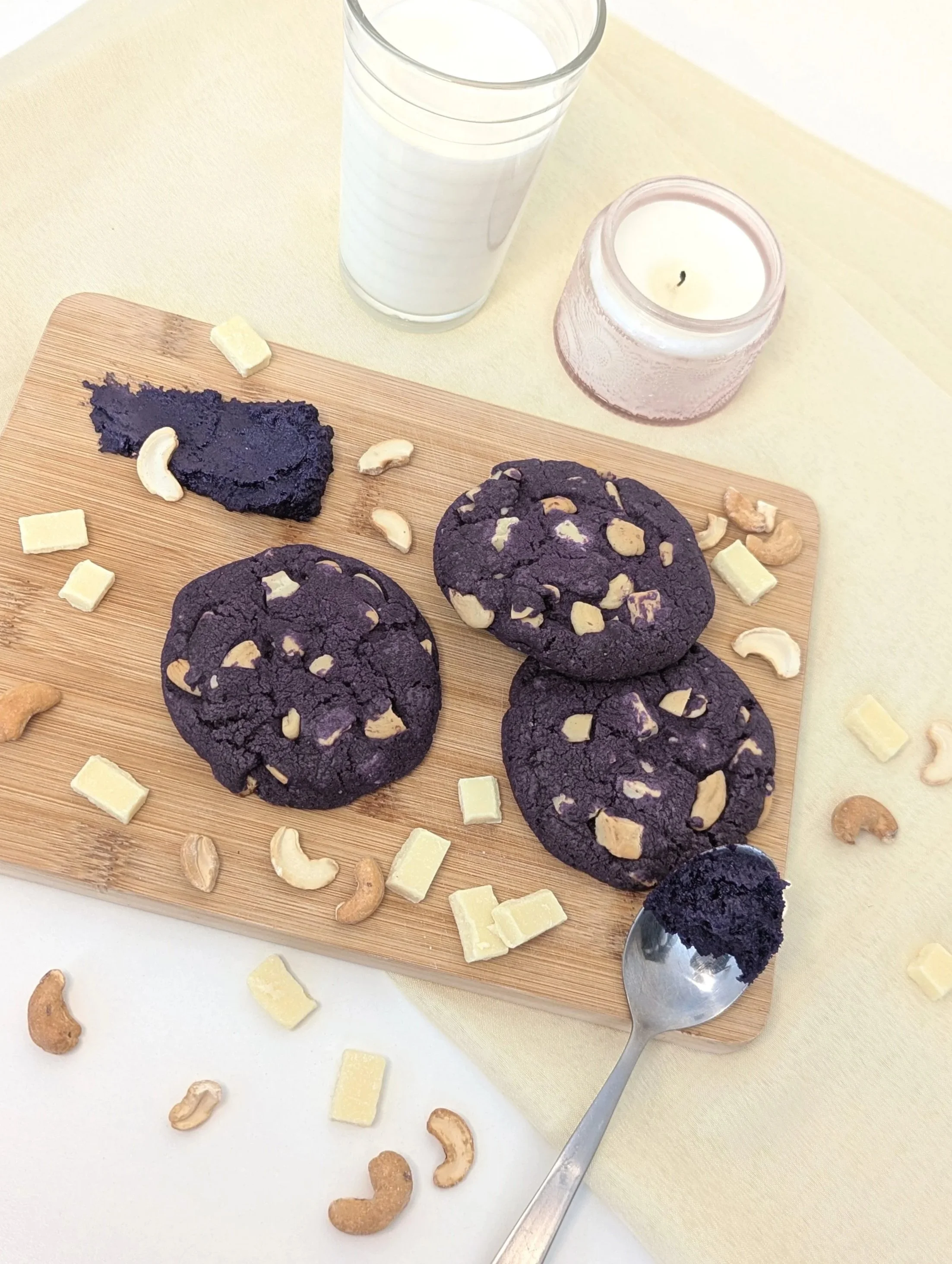
A soft and tender ube cookie base with roasted cashew pieces and white chocolate chunks.
Allergens: Wheat, Milk, Egg, Cashew.
Processed in a facility that also processes nuts.
Made in a Home Kitchen.
Key ingredients in all of our baked goods benefit greatly from pollinators! Cashew nuts are the true fruits of Anacardium occidentale, a tree native to Brazil and now commercially also grown in India, East Africa, Southeast Asia, and Australia. The nut grows off an accessory fruit from the tree, called a cashew apple. Although the flowers of cashew trees are self-fertile, fruit set is greatly aided by cross pollination via wind or insects. Their insect pollinators include sweat bees, carpenter bees, reed bees, wasps, ants, flies, butterflies, moths, and beetles—so much diversity!
White chocolate is made from cocoa butter, the edible fat that gets extracted from cocoa beans. Cocoa beans are the dried, fermented seeds of cacao fruits which grow on the cacao tree, Theobroma cacao. The flowers of the cacao tree are tiny and complex and therefore need tiny pollinators to transfer their pollen so they can produce fruit. That’s where chocolate midges come in! Tiny flies in the family Ceratopogonidae, including the genus Forcipomyia, are known to be important pollinators of cacao. Other types of tiny flies, wasps, and ants have also been observed visiting cacao flowers, but more evidence is needed to know if they are successfully pollinating.
Ube (Dioscorea alata) is a purple yam native to the Philippines. Like with other species of yams, farmers are able to propagate the crops that are grown as food and therefore do not require pollination to make seeds. Pollination is essential, however, to breeding yams, which might be done to maintain genetic diversity and to help address food security with yams. Due to the stickiness of yam pollen grains, they cannot be wind pollinated and must be pollinated by hand or by insects, although several factors make both methods difficult to accomplish. Thrips, beetles, flies, ants, and other insects have been observed pollinating various species of yam, but the flowers seem to not be very attractive to insects.
References:
• Berger, Iris, et al. “Agroecological cashew cultivation increases pollinator abundance, diversity and flower visitation rates, with potential yield benefits.” Agriculture, Ecosystems & Environment, Volume 396, Feb. 2026, https://doi.org/10.1016/j.agee.2025.110006.
• “Cacao pollination.” Cacao Pollination, Community Ecology Lab at Vrije Universiteit Brussel, https://cacaopollination.com/cacao-pollinators/. Accessed 1 Sep. 2025.
• Koeneke, Mary Alice. “From Cacao to Chocolate.” Penn State Extension, 20 Jan. 2023, https://extension.psu.edu/from-cacao-to-chocolate.
• McLaughlin, John, et al. 2008. “Cashew-Apple Fruit Growing in the Florida Home Landscape: HS1127 HS377, 4 2008”. EDIS 2008 (4). Gainesville, FL. https://doi.org/10.32473/edis-hs377-2008.
• Mondo, J.M., et al. “Floral Biology and Pollination Efficiency in Yam (Dioscorea spp.).” Agriculture, 2020; 10(11): 560. https://doi.org/10.3390/agriculture10110560.
• Wijayanti, Retno, et al. “The Kinds and Abundance of Flower-Visiting Insects and their Impact on the Yield of Cashew (Anacardium occidentale L.). International Journal of Agriculture and Biosciences, 2025; 14(3): 388-394. https://doi.org/10.47278/journal.ijab/2025.027.
IMPORTANT NOTE: All purchases of our baked goods through this website are PRE-ORDERS that need to be picked up at the location and date/timeframe specified during checkout. Shipping is available only within New York state via USPS Priority Mail. Shipments are sent out the Monday following the pre-order pick-up date and should arrive in 2-3 days. If you enter a shipping address outside of NY state, your order will be canceled and refunded.
1.75 oz cookie, 3 pieces per order.
A soft and tender ube cookie base with roasted cashew pieces and white chocolate chunks.
Allergens: Wheat, Milk, Egg, Cashew.
Processed in a facility that also processes nuts.
Made in a Home Kitchen.
Key ingredients in all of our baked goods benefit greatly from pollinators! Cashew nuts are the true fruits of Anacardium occidentale, a tree native to Brazil and now commercially also grown in India, East Africa, Southeast Asia, and Australia. The nut grows off an accessory fruit from the tree, called a cashew apple. Although the flowers of cashew trees are self-fertile, fruit set is greatly aided by cross pollination via wind or insects. Their insect pollinators include sweat bees, carpenter bees, reed bees, wasps, ants, flies, butterflies, moths, and beetles—so much diversity!
White chocolate is made from cocoa butter, the edible fat that gets extracted from cocoa beans. Cocoa beans are the dried, fermented seeds of cacao fruits which grow on the cacao tree, Theobroma cacao. The flowers of the cacao tree are tiny and complex and therefore need tiny pollinators to transfer their pollen so they can produce fruit. That’s where chocolate midges come in! Tiny flies in the family Ceratopogonidae, including the genus Forcipomyia, are known to be important pollinators of cacao. Other types of tiny flies, wasps, and ants have also been observed visiting cacao flowers, but more evidence is needed to know if they are successfully pollinating.
Ube (Dioscorea alata) is a purple yam native to the Philippines. Like with other species of yams, farmers are able to propagate the crops that are grown as food and therefore do not require pollination to make seeds. Pollination is essential, however, to breeding yams, which might be done to maintain genetic diversity and to help address food security with yams. Due to the stickiness of yam pollen grains, they cannot be wind pollinated and must be pollinated by hand or by insects, although several factors make both methods difficult to accomplish. Thrips, beetles, flies, ants, and other insects have been observed pollinating various species of yam, but the flowers seem to not be very attractive to insects.
References:
• Berger, Iris, et al. “Agroecological cashew cultivation increases pollinator abundance, diversity and flower visitation rates, with potential yield benefits.” Agriculture, Ecosystems & Environment, Volume 396, Feb. 2026, https://doi.org/10.1016/j.agee.2025.110006.
• “Cacao pollination.” Cacao Pollination, Community Ecology Lab at Vrije Universiteit Brussel, https://cacaopollination.com/cacao-pollinators/. Accessed 1 Sep. 2025.
• Koeneke, Mary Alice. “From Cacao to Chocolate.” Penn State Extension, 20 Jan. 2023, https://extension.psu.edu/from-cacao-to-chocolate.
• McLaughlin, John, et al. 2008. “Cashew-Apple Fruit Growing in the Florida Home Landscape: HS1127 HS377, 4 2008”. EDIS 2008 (4). Gainesville, FL. https://doi.org/10.32473/edis-hs377-2008.
• Mondo, J.M., et al. “Floral Biology and Pollination Efficiency in Yam (Dioscorea spp.).” Agriculture, 2020; 10(11): 560. https://doi.org/10.3390/agriculture10110560.
• Wijayanti, Retno, et al. “The Kinds and Abundance of Flower-Visiting Insects and their Impact on the Yield of Cashew (Anacardium occidentale L.). International Journal of Agriculture and Biosciences, 2025; 14(3): 388-394. https://doi.org/10.47278/journal.ijab/2025.027.
IMPORTANT NOTE: All purchases of our baked goods through this website are PRE-ORDERS that need to be picked up at the location and date/timeframe specified during checkout. Shipping is available only within New York state via USPS Priority Mail. Shipments are sent out the Monday following the pre-order pick-up date and should arrive in 2-3 days. If you enter a shipping address outside of NY state, your order will be canceled and refunded.