
 Image 1 of 4
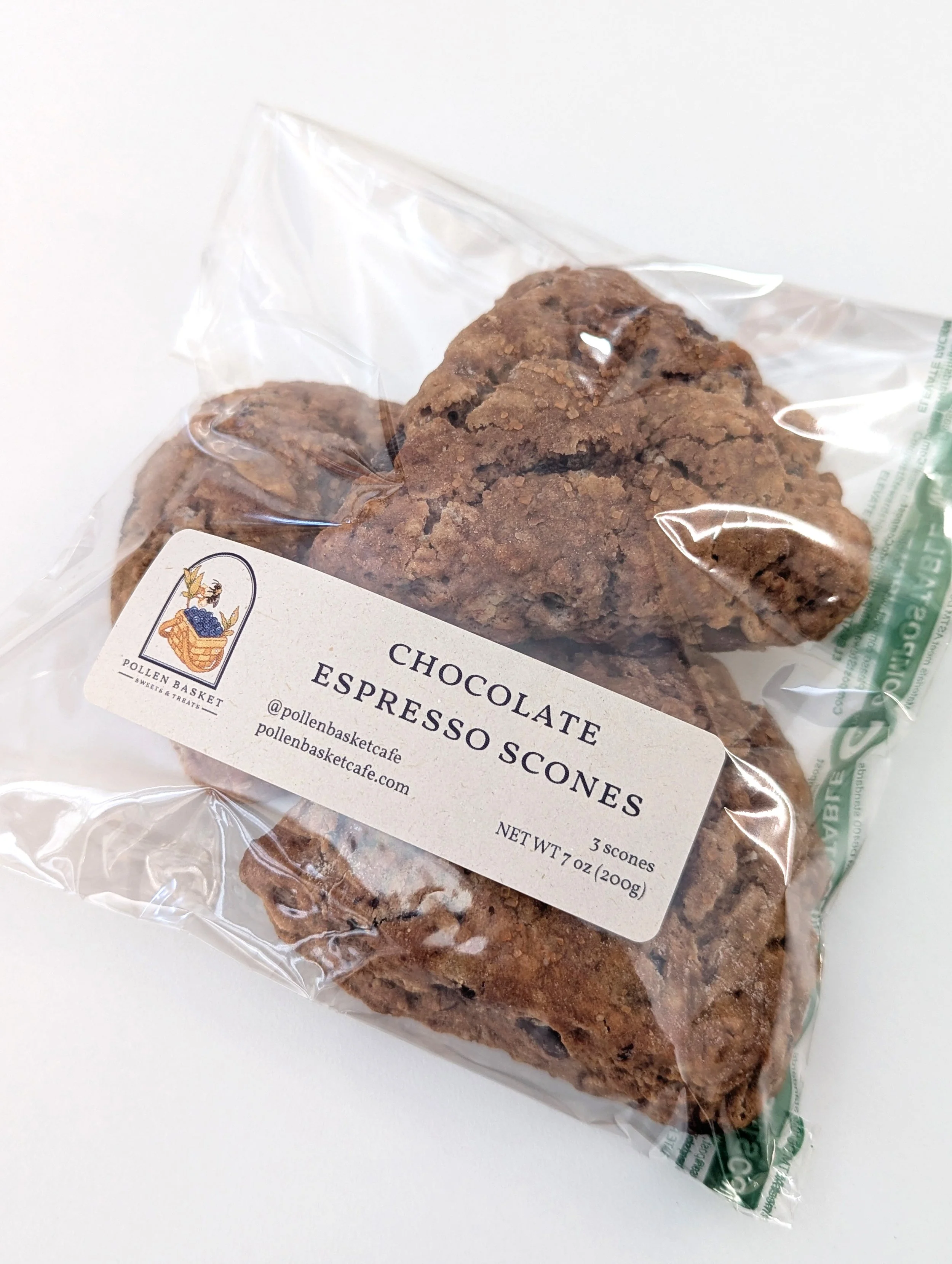 Image 2 of 4
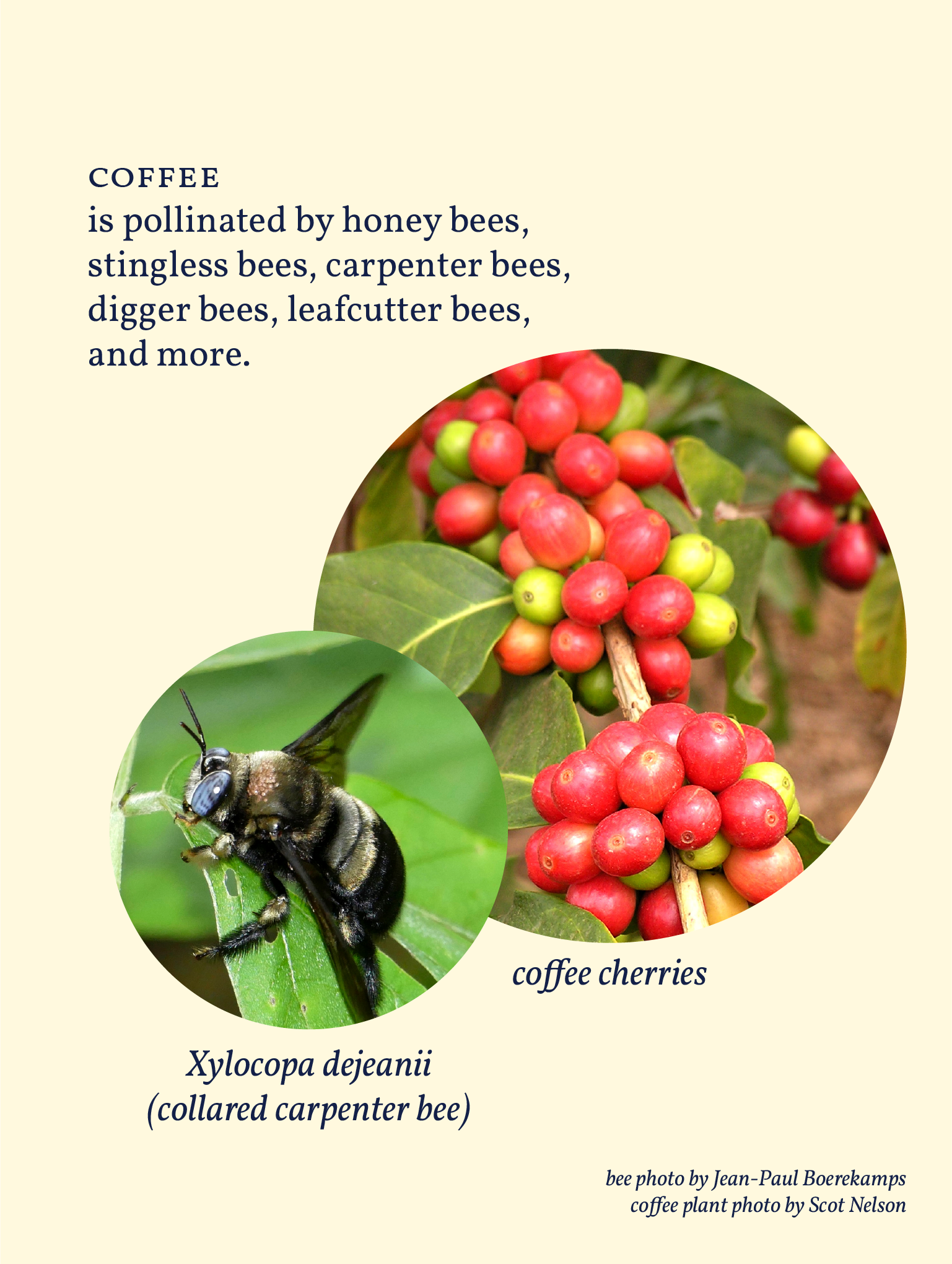 Image 3 of 4
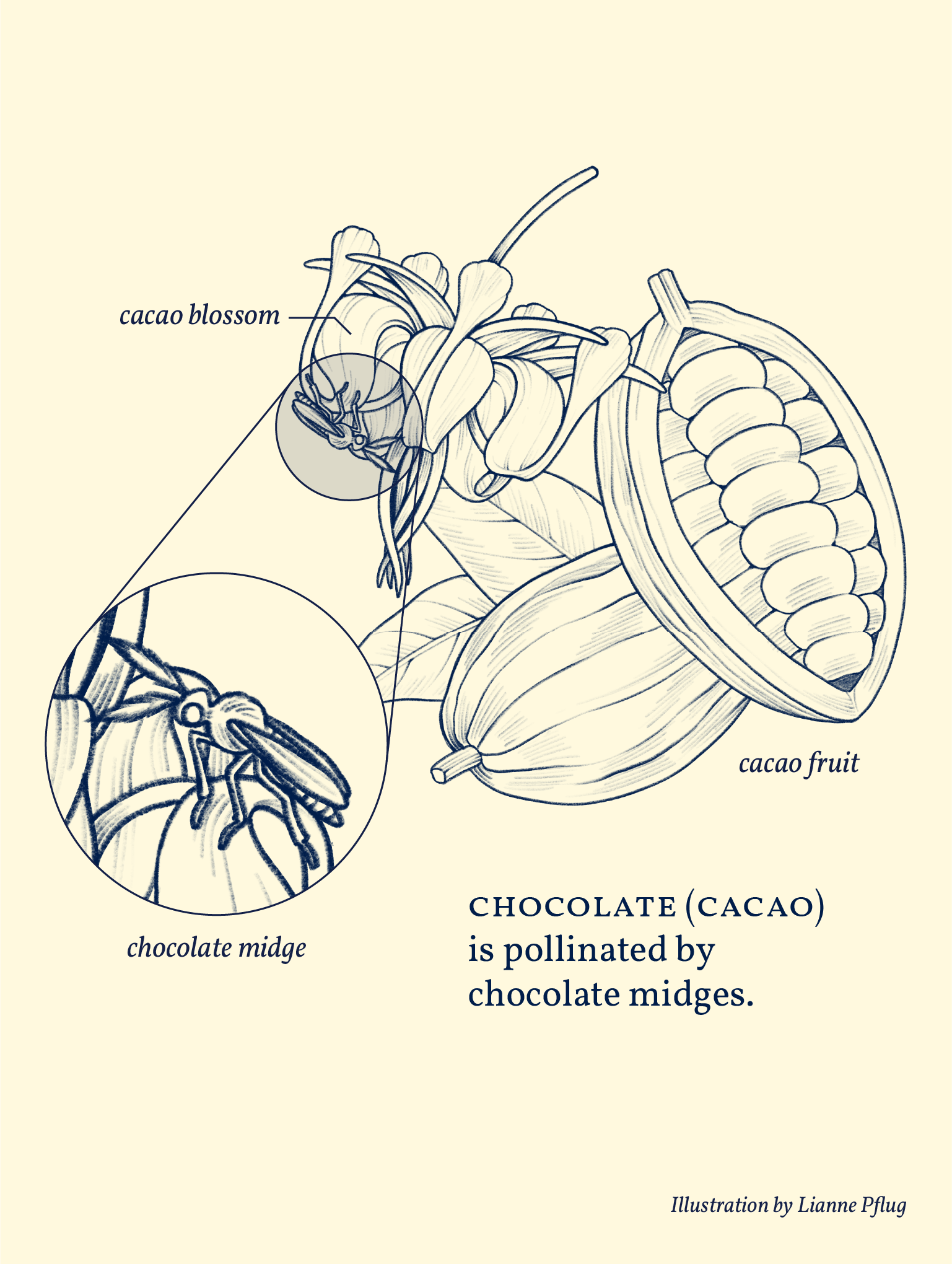 Image 4 of 4
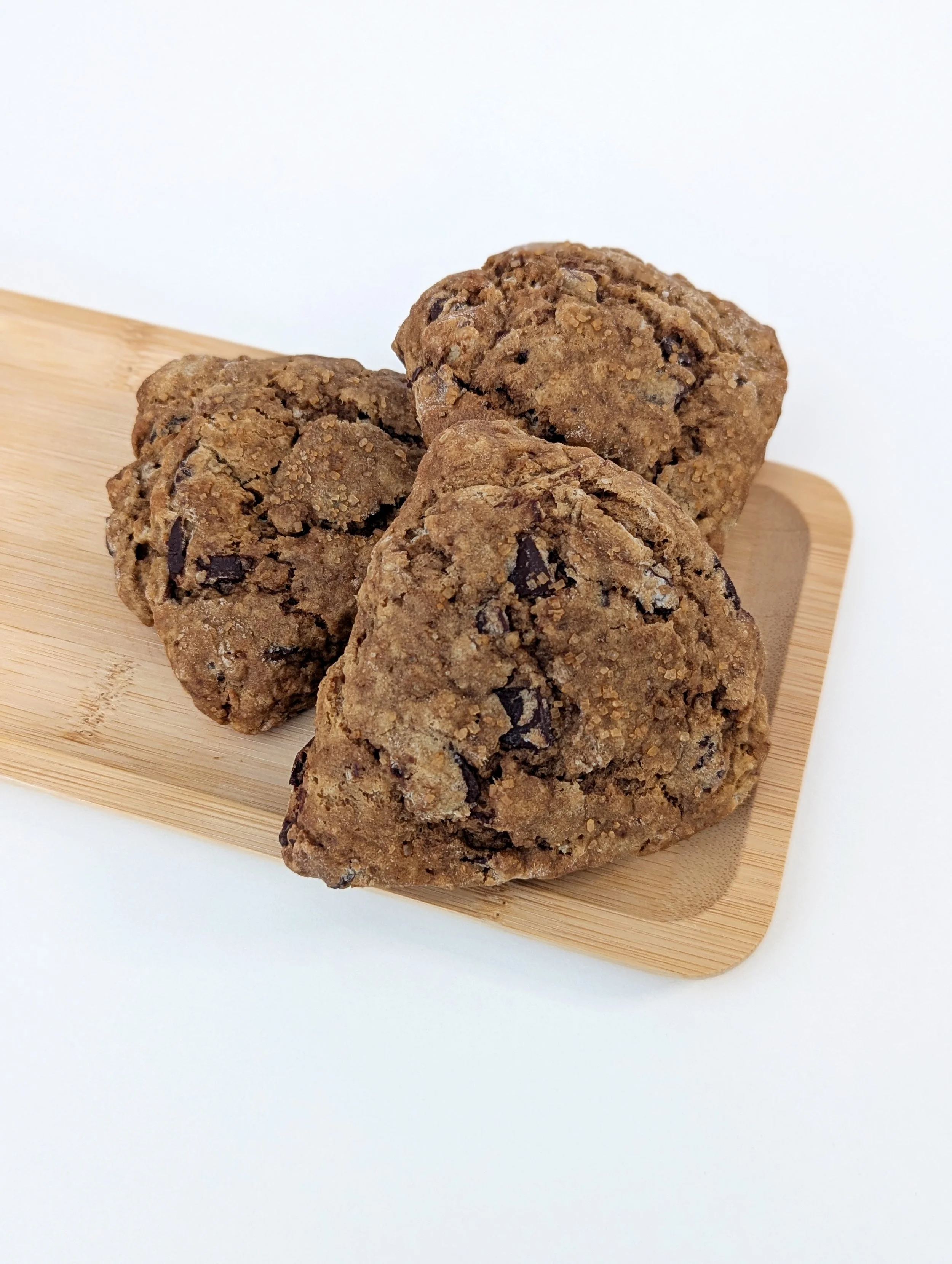
2.25 oz scone, 3 pieces per order.
A flaky and tender espresso scone with semisweet chocolate chunks.
Allergens: Wheat, Milk, Egg.
Processed in a facility that also processes nuts.
Made in a Home Kitchen.
Key ingredients in all of our baked goods benefit greatly from pollinators! Coffee beans are the dried, roasted seeds of coffee cherries, the fruit of coffee plants. The world’s leading coffee crop, Coffea arabica, is actually self-pollinating, but insect pollination significantly improves the quantity and quality of its fruit and seeds. The second leading coffee crop, Coffea canephora (which includes robusta coffee), is self-incompatible and is therefore dependent on cross-pollination by insects. Pollinators of coffee plants include honey bees, stingless bees, small and large carpenter bees, sweat bees, digger bees, leafcutter bees, and more!
Chocolate is made from the dried, fermented seeds of cacao fruits which grow on the cacao tree, Theobroma cacao. The flowers of the cacao tree are tiny and complex and therefore need tiny pollinators to transfer their pollen so they can produce fruit. That’s where chocolate midges come in! Tiny flies in the family Ceratopogonidae, including the genus Forcipomyia, are known to be important pollinators of cacao. Other types of tiny flies, wasps, and ants have also been observed visiting cacao flowers, but more evidence is needed to know if they are successfully pollinating.
References:
• “Cacao pollination.” Cacao Pollination, Community Ecology Lab at Vrije Universiteit Brussel, https://cacaopollination.com/cacao-pollinators/. Accessed 1 Sep. 2025.
• Klein, A.-M., et al. “Pollination of Coffea canephora in relation to local and regional agroforestry management.” Journal of Applied Ecology, Volume 40, Issue 5, October 2003, pp. 837-845. https://doi.org/10.1046/j.1365-2664.2003.00847.x.
• Koeneke, Mary Alice. “From Cacao to Chocolate.” Penn State Extension, 20 Jan. 2023, https://extension.psu.edu/from-cacao-to-chocolate.
• Martinez-Salinas, Alejandra, et al. “Interacting pest control and pollination services in coffee systems.” Proceedings of the National Academy of Sciences, Volume 119, Issue 15, 12 April 2022. https://doi.org/10.1073/pnas.2119959119.
IMPORTANT NOTE: All purchases of our baked goods through this website are PRE-ORDERS that need to be picked up at the location and date/timeframe specified during checkout. Shipping is available only within New York state via USPS Priority Mail. Shipments are sent out the Monday following the pre-order pick-up date and should arrive in 2-3 days. If you enter a shipping address outside of NY state, your order will be canceled and refunded.
2.25 oz scone, 3 pieces per order.
A flaky and tender espresso scone with semisweet chocolate chunks.
Allergens: Wheat, Milk, Egg.
Processed in a facility that also processes nuts.
Made in a Home Kitchen.
Key ingredients in all of our baked goods benefit greatly from pollinators! Coffee beans are the dried, roasted seeds of coffee cherries, the fruit of coffee plants. The world’s leading coffee crop, Coffea arabica, is actually self-pollinating, but insect pollination significantly improves the quantity and quality of its fruit and seeds. The second leading coffee crop, Coffea canephora (which includes robusta coffee), is self-incompatible and is therefore dependent on cross-pollination by insects. Pollinators of coffee plants include honey bees, stingless bees, small and large carpenter bees, sweat bees, digger bees, leafcutter bees, and more!
Chocolate is made from the dried, fermented seeds of cacao fruits which grow on the cacao tree, Theobroma cacao. The flowers of the cacao tree are tiny and complex and therefore need tiny pollinators to transfer their pollen so they can produce fruit. That’s where chocolate midges come in! Tiny flies in the family Ceratopogonidae, including the genus Forcipomyia, are known to be important pollinators of cacao. Other types of tiny flies, wasps, and ants have also been observed visiting cacao flowers, but more evidence is needed to know if they are successfully pollinating.
References:
• “Cacao pollination.” Cacao Pollination, Community Ecology Lab at Vrije Universiteit Brussel, https://cacaopollination.com/cacao-pollinators/. Accessed 1 Sep. 2025.
• Klein, A.-M., et al. “Pollination of Coffea canephora in relation to local and regional agroforestry management.” Journal of Applied Ecology, Volume 40, Issue 5, October 2003, pp. 837-845. https://doi.org/10.1046/j.1365-2664.2003.00847.x.
• Koeneke, Mary Alice. “From Cacao to Chocolate.” Penn State Extension, 20 Jan. 2023, https://extension.psu.edu/from-cacao-to-chocolate.
• Martinez-Salinas, Alejandra, et al. “Interacting pest control and pollination services in coffee systems.” Proceedings of the National Academy of Sciences, Volume 119, Issue 15, 12 April 2022. https://doi.org/10.1073/pnas.2119959119.
IMPORTANT NOTE: All purchases of our baked goods through this website are PRE-ORDERS that need to be picked up at the location and date/timeframe specified during checkout. Shipping is available only within New York state via USPS Priority Mail. Shipments are sent out the Monday following the pre-order pick-up date and should arrive in 2-3 days. If you enter a shipping address outside of NY state, your order will be canceled and refunded.